Attorneys walking through a courthouse corridor

Asylum · withholding of removal · Convention Against Torture

Seeking safety is human. Building the case takes proof.

What happened to you matters. We represent people from countries around the world in complex asylum and protection matters—especially when criminal history, detention, prior orders or appeal deadlines complicate the record. Our lawyers organize testimony, documents and country evidence into a coherent case for the forum that will decide it.

Experience

More than twenty years representing immigrants.

Mikhail Usher, Esq. has represented immigrants for more than two decades, throughout the United States and its territories, and has personally handled hundreds of asylum matters. The practice runs from the USCIS asylum office through immigration court, the Board of Immigration Appeals and the federal courts.

Where the firm has argued

Before immigration judges nationwide, the Board of Immigration Appeals, the First, Second and Third Circuit Courts of Appeals, and in habeas corpus proceedings in federal district court.

Admissions

New York, New Jersey and Florida; the Eastern, Southern and Northern Districts of New York, the District of New Jersey, and the Southern and Middle Districts of Florida.

Removal defense

Thousands of removal matters, litigated and appealed.

Removal defense is the core of the practice: asylum, withholding of removal, Convention Against Torture protection, cancellation of removal and other relief, together with the bond hearings, habeas petitions, motions to reopen, BIA appeals and petitions for review that surround them.

Trial level

Master and individual hearings, detained and non-detained dockets, credible-fear and reasonable-fear review, bond and custody redetermination, and cases complicated by criminal history.

Review

Hundreds of cases before the Board of Immigration Appeals and in the federal courts, including petitions for review in the courts of appeals and habeas corpus petitions in the district courts.

Every forum

The same team, from the asylum office to the court of appeals.

An asylum case can pass through four decision-makers, and each one applies a different procedure, a different standard and a different clock. The firm handles the case at whichever stage it is in, and prepares each stage with the next one in mind.

USCIS asylum office

Affirmative applications, interviews, requests for evidence, Notices of Intent to Deny, and referrals to court.

Immigration court and BIA

Defensive cases before an immigration judge, then appeals to the Board within 30 days of the decision.

Federal review

Petitions for review in the courts of appeals within 30 days of the Board's decision, and habeas corpus in the district courts for custody questions.

Nationwide

Immigration law is federal. We appear wherever the case is.

USCIS asylum offices and the immigration courts are federal, so an attorney admitted in any state may appear before them anywhere in the country. The firm represents asylum seekers throughout the United States and its territories, including people detained far from home.

Offices

Brooklyn, New York: 1600 Sheepshead Bay Road, Suite 203, (718) 484-7510. Aventura, Florida: 18851 NE 29th Avenue, Suite 200, (754) 258-3270.

Languages

English, Russian, Spanish and Uzbek in-house; live interpreters for other languages.

Remote and detained cases

Video hearings, detained dockets at facilities across the country, and clients who cannot travel. For detention and bond, see ICEBail.com.

Interactive case navigator

What is happening in the case right now?

The forum and the latest document usually determine the next move. Choose the closest situation for a focused starting point. This tool provides general information; a lawyer must review the actual record.

Likely starting point · affirmative asylum

Begin with the deadline, eligibility and the evidence already available.

If there is no removal case, Form I-589 may begin with USCIS. Before drafting, confirm the last-arrival date, identify every possible protected ground and preserve records that may disappear.
Not sure which situation fits? Use the two-minute case-path guide or call the firm.

Not yet filed · step 1

Calculate the one-year period

The one-year clock runs from the date of last arrival, not from the day you decide to apply, and USCIS or the judge counts it against you unless an exception is proved. Getting the date wrong by even a few days can move a case from ordinary to exceptional.

What we do

We fix the arrival date from passport stamps, I-94 records, travel history and any CBP encounter record, then test every changed-circumstances and extraordinary-circumstances exception with evidence, not argument.

Authority

INA 208(a)(2)(B), (D); 8 C.F.R. 208.4(a)

Not yet filed · step 2

Choose the legal theory before writing

An asylum case is proved element by element: past persecution or a well-founded fear, on account of a protected ground, by the government or an actor it cannot or will not control. A declaration written before the theory is set tells a story without proving the case.

What we do

We identify the protected ground and the nexus theory first, decide which facts carry each element, and only then draft the declaration so every paragraph does work.

Authority

INA 101(a)(42)(A); 8 C.F.R. 208.13(b)

Not yet filed · step 3

Build corroboration early

The adjudicator can require corroboration of otherwise credible testimony where it is reasonably available. Records in the home country, witnesses abroad and dated news coverage get harder to obtain every month.

What we do

We list what each fact needs, request records and statements immediately, and document every attempt so the absence of a document is explained rather than held against you.

Authority

INA 208(b)(1)(B)(ii); Matter of L-A-C-, 26 I&N Dec. 516 (BIA 2015)

Pending with USCIS · step 1

Confirm every receipt and address

USCIS mails interview notices, biometrics appointments and requests for evidence to the address on file. A notice that goes to an old address is still deemed delivered, and a missed interview can send the case to immigration court.

What we do

We keep the receipt notice, confirm the address on every USCIS record, file the change of address within 10 days of any move, and check case status on a schedule.

Authority

INA 265; 8 C.F.R. 208.10; 8 C.F.R. 265.1

Pending with USCIS · step 2

Update the evidence deliberately

New events, new documents and changed country conditions must be added, but every addition is compared against the original filing. An unexplained difference becomes an inconsistency at the interview.

What we do

We file supplements that fit the original theory, explain any change on the record before the officer notices it, and date every country-conditions source.

Authority

8 C.F.R. 208.9(e); INA 208(b)(1)(B)(iii)

Pending with USCIS · step 3

Prepare before an interview is scheduled

Interview notices can arrive with a few weeks' lead time, and a request to reschedule can cost months. Preparation that starts when the notice arrives is preparation done in a hurry.

What we do

We hold the preparation sessions before the notice comes: the declaration is reviewed line by line, the interpreter is arranged, and the client has practiced answering in the first person.

Authority

8 C.F.R. 208.9

In immigration court · step 1

Identify the court, judge and next hearing

The hearing notice, not a phone call or a rumor, sets the date. Missing a hearing can produce an in absentia removal order that is hard to undo.

What we do

We confirm the docket through the EOIR automated system and the court, calendar the master and individual hearings, and check the assigned judge's standing orders and filing rules.

Authority

INA 240(b)(5); 8 C.F.R. 1003.18

In immigration court · step 2

Review the NTA and prior filings together

Pleadings to the Notice to Appear admit or deny the charges, and every prior application, interview record and statement can be used at the hearing. What was conceded early shapes what can be argued later.

What we do

We review the NTA for defects, obtain the record of proceedings and the USCIS file, and plead with the merits strategy in mind.

Authority

INA 239(a); 8 C.F.R. 1003.15; Matter of Fernandes, 28 I&N Dec. 605 (BIA 2022)

In immigration court · step 3

Calendar evidence and witness deadlines

Immigration courts set filing deadlines for applications, exhibits and witness lists, usually well before the individual hearing. Late evidence can be excluded no matter how strong it is.

What we do

We calendar every deadline from the scheduling order and the Immigration Court Practice Manual, file complete exhibit packets on time, and lodge witness lists with summaries.

Authority

8 C.F.R. 1003.31; Immigration Court Practice Manual ch. 3

Detained by ICE · step 1

Locate the person and collect the A-number

Transfers between facilities happen without notice, and every filing, bond request and court record turns on the A-number and the current custody location.

What we do

We use the ICE detainee locator, contact the facility, record the A-number and every notice received, and identify which immigration court has the case.

Authority

8 C.F.R. 1003.19; ICE Online Detainee Locator

Detained by ICE · step 2

Identify prior orders and screening posture

A prior removal order, an expedited-removal history or a credible-fear or reasonable-fear finding changes which forms of protection are available and which court has jurisdiction.

What we do

We obtain the custody and screening records, determine whether the case is a full removal proceeding or a withholding-only proceeding, and plan around that track.

Authority

INA 235(b)(1); INA 241(a)(5); 8 C.F.R. 208.31, 1208.2(c)

Detained by ICE · step 3

Coordinate release and merits strategy

A bond hearing, a habeas petition and the protection claim are decided under different standards, in different forums, on different records. Statements made in one can be used in another.

What we do

We pursue release and the merits in parallel, keeping the records consistent, and use the federal district court when the immigration court lacks authority over custody.

Authority

INA 236(a); 28 U.S.C. 2241; Matter of Guerra, 24 I&N Dec. 37 (BIA 2006)

After a denial · step 1

Preserve the complete decision and envelope

Appeal and reopening deadlines run from the date of the decision or its service. The envelope, the postmark and the notice date can decide whether a filing is timely.

What we do

We keep the full decision, the envelope and every notice, confirm the operative date, and calendar the 30-day appeal deadline the same day.

Authority

8 C.F.R. 1003.38(b); 8 C.F.R. 1003.2(c)(2)

After a denial · step 2

Separate factual from legal error

The Board reviews findings of fact for clear error and legal questions de novo; the court of appeals reviews facts under the substantial-evidence standard. The argument has to fit the standard.

What we do

We read the decision against the record, identify each error, classify it, and frame the notice of appeal and brief around the errors a reviewing body can actually correct.

Authority

8 C.F.R. 1003.1(d)(3); INA 242(b)(4)(B); Urias-Orellana v. Bondi (2026)

After a denial · step 3

Evaluate protection and stay strategy

An appeal to the BIA stays removal automatically; a petition for review does not, and a motion to reopen does not either. Choosing the wrong path can leave a client removable while the case is still alive.

What we do

We choose among appeal, reopening, withholding-only relief and a stay motion based on the deadline, the record and the risk of removal, and file the stay request with the appeal or petition when needed.

Authority

8 C.F.R. 1003.6; INA 242(b)(3)(B); INA 240(c)(7)

Where the work happens

We prepare the record—and stand beside you when it is tested.

Asylum representation changes with the forum. The preparation for a USCIS interview is different from litigation before an immigration judge, and both must account for what may happen after the decision.

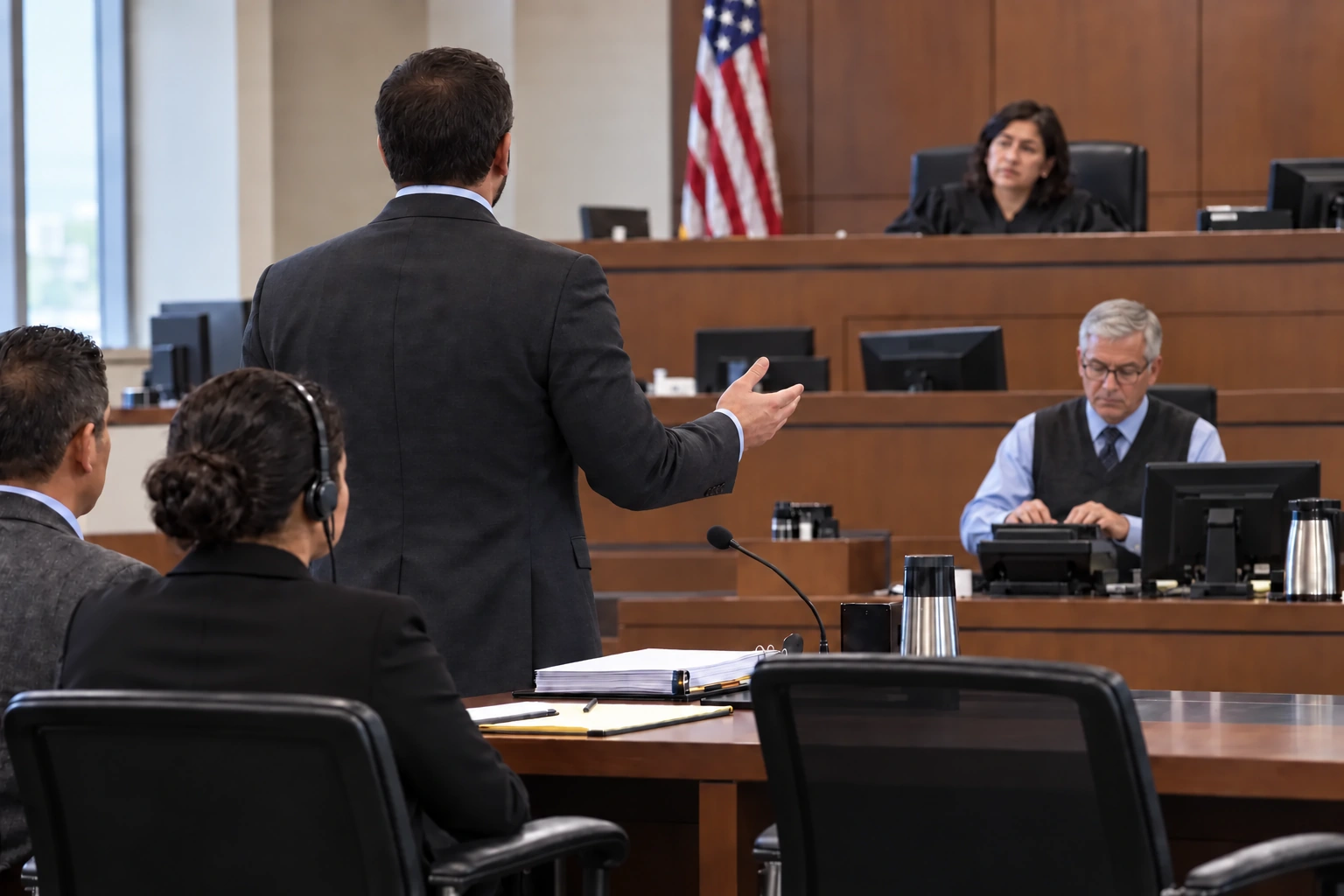
Counsel addressing a judge while a court reporter records the proceeding

Immigration court

We litigate the case where testimony and proof are tested.

Defensive asylum is courtroom work. We prepare the witness, organize exhibits, brief the legal theory, address objections and build a hearing record that remains usable if appellate review becomes necessary.

Explore immigration-court representation
USCIS interview preparation

USCIS asylum interview

The interview is not the first time the case should be tested.

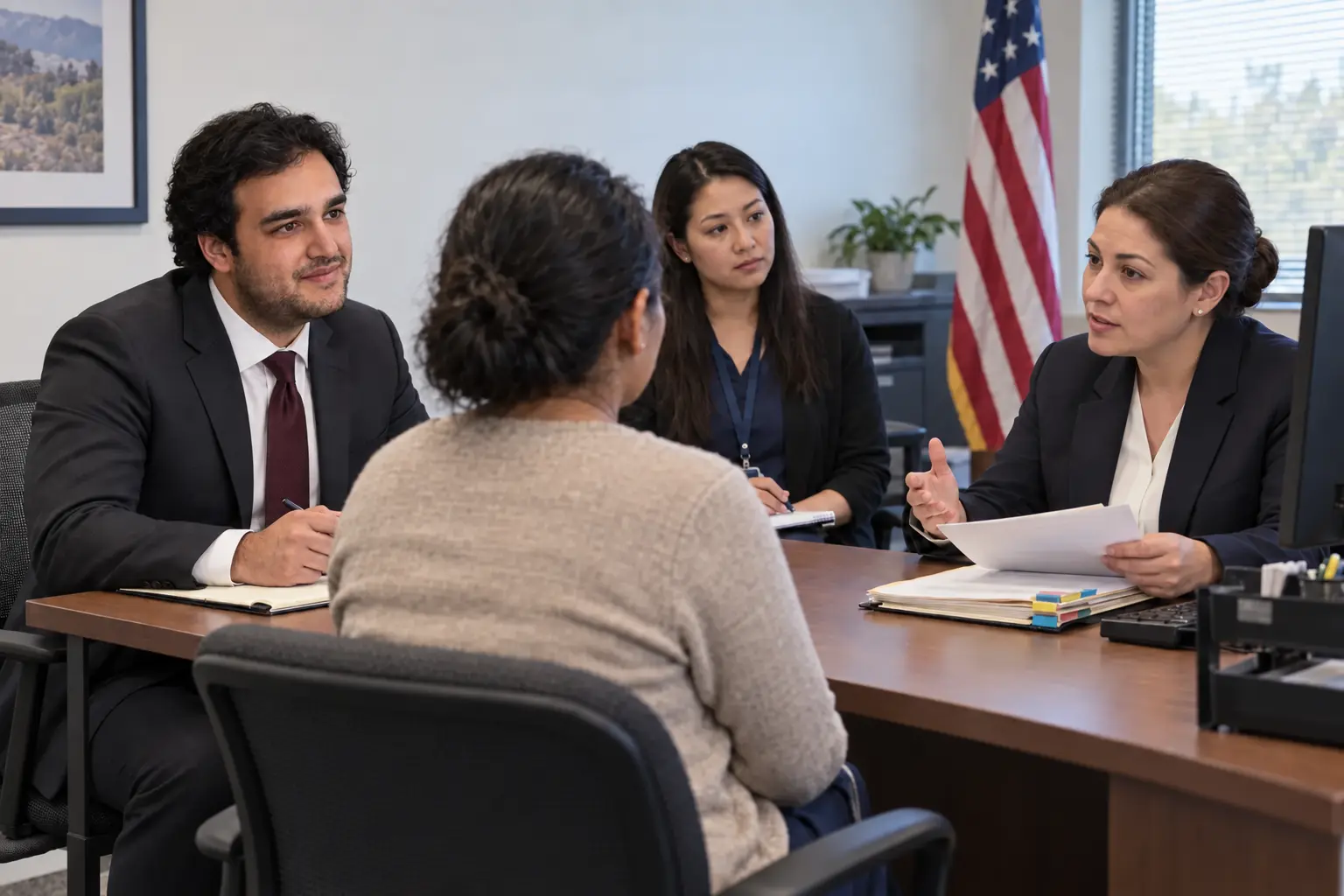
We prepare the testimony against the declaration and evidence, identify likely credibility questions, address interpretation concerns and attend the interview as counsel.

Prepare for the asylum interview
People leaving a courthouse

After a favorable decision

When protection is granted, the next chapter begins.

We explain what the decision provides, identify the documents and deadlines that follow, and discuss the obligations and options that may apply. Every matter depends on its own facts and law.

Meet the lawyers behind the work

Deadline planning

Check the general one-year anniversary.

Asylum applications generally must be filed within one year of the applicant’s last arrival in the United States. Enter a date for a planning reference, then verify the deadline and any possible exception with counsel.

This date stays in your browser. Exceptions may apply. The one-year asylum filing deadline does not apply to withholding of removal or protection under the Convention Against Torture.

Read the complete deadline guide
Attorneys reviewing country-conditions evidence

Build a record that can be tested

A strong case is not one document.

The application, declaration, exhibits and testimony must do more than repeat the same story. Each part should answer a different legal question—and all of them must agree.

A complex protection case creates hundreds of moving parts. Our attorneys, paralegals and support staff work from the same organized record so declarations, exhibits, translations, notices and deadlines remain connected from filing through interview, hearing or review.

01 · Legal theory

Decide what the facts must prove.

The theory is the architecture of the case. Before drafting, the team identifies the protected ground, the reason for the harm, the responsible actor, the government-protection question and every issue that could limit relief.

Protected ground and nexus

We test race, religion, nationality, political opinion and proposed social-group theories against the applicant’s actual history. Direct statements, selection patterns, family ties and imputed beliefs may show why the actor targeted this person.

Actor, protection and relocation

Government action differs from harm by a private person or armed group. The record must explain reporting, official response, futility or danger, the actor’s reach, and whether relocation would be safe and reasonable.

Procedure and possible bars

We review the one-year filing rule, prior status or firm resettlement, criminal history, security and persecutor concerns, previous filings, and whether the matter is affirmative, defensive, detained or on review.

02 · Your declaration

Build a precise account in the client’s voice.

A declaration is not a collection of legal phrases. It is a disciplined, chronological account that lets the officer or judge understand what happened, why it happened, what the applicant did next and why return is feared now.

Chronology with usable detail

Dates, places, participants, direct words, injuries, reporting, movement and later contact are organized so the reader can follow each event. Approximate dates are identified honestly rather than forced into false precision.

Difficult facts addressed early

Delay, return travel, omissions, inconsistent dates, prior immigration filings, criminal history and third-country residence are investigated and explained before they become cross-examination material.

Consistency across the record

The declaration is checked against Form I-589, border and fear-interview notes, visa filings, court submissions, documents and translations. Differences are resolved or explained—never ignored.

03 · Corroboration

Prove each important proposition with the right source.

Good corroboration does not merely repeat the declaration. Each exhibit should establish a specific fact: identity, membership, an incident, injury, motive, official response, continued interest, country conditions or the limits of relocation.

Personal and official records

Messages, photographs, medical records, police or court papers, membership documents, employment records, travel evidence and authenticated digital material are matched to the events they support.

Witnesses, experts and country evidence

Witness declarations explain how the person knows the facts. Experts and dated country materials are selected for the relevant actor, region, group and time—not added as a generic document dump.

Missing evidence

When a document cannot be obtained, the file records the attempts, danger or practical barrier and identifies another way to prove the point. Translation and authentication issues are handled before submission.

04 · Preparation

Prepare for the questions the record will generate.

Preparation is not memorizing a script. The applicant must understand the chronology, answer truthfully in their own words, recognize documents and remain steady when questions become detailed, repetitive or uncomfortable.

Attorney-led questioning

Practice covers direct questions, likely follow-up, credibility problems, missing records and the government’s strongest points. The team identifies where an answer needs clarity without coaching artificial language.

Interpretation and translation

Names, dates, dialect, sensitive terminology and translated documents are checked in advance. USCIS interpreter rules and immigration-court interpretation are treated as different procedural settings.

Documents and logistics

The applicant learns how the exhibit record is organized, what to bring, where to appear, how remote or in-person proceedings work and which filing, biometrics, fee or hearing deadlines still control.

Criminal charges + immigration status

One plea can reshape an immigration case.

Crimigration is the point where criminal defense and immigration law collide. For a noncitizen, the exact statute, plea language, sentence and record can affect detention, removability, asylum, withholding of removal, discretionary relief and naturalization.

Usher Law Group brings both sides of that analysis together. Mikhail Usher, Esq. developed the criminal division at his prior firm before founding Usher Law Group, and the firm has more than a decade of criminal-defense experience in matters ranging from misdemeanors to felonies and white-collar defense.

What we examine together

01 · The criminal record

Read the record the way immigration law will.

An offense label is rarely the whole answer. Immigration consequences may turn on the exact statute, subsection, charging language, plea colloquy, disposition, sentence and documents the government is permitted to use.

Collect the controlling documents

We identify the complaint or indictment, certificate of disposition, plea and sentencing records, orders, minutes and any post-conviction history. Missing or inconsistent records are treated as issues to resolve—not details to assume.

Classify the offense precisely

We compare the statute and record to immigration categories that may affect removability, detention, admissibility, asylum bars, good-moral-character findings and discretionary relief. The criminal court’s label may not control the federal analysis.

Separate allegations from outcomes

An arrest is not a conviction. Even so, allegations, admissions or underlying conduct may matter in some discretionary or protection-related inquiries. We distinguish what was alleged, admitted, proved and ultimately decided in every jurisdiction.

02 · The immigration posture

Locate the case before choosing the move.

The same criminal record can create different risks depending on how a person entered, present status, pending applications, prior orders, custody, charging allegations and whether the matter is before USCIS, immigration court, the BIA or a federal court.

Entry, status and prior filings

We review arrival and admission history, status changes, travel, prior applications, interviews, agency decisions, statements to the government and any prior concessions. Those facts help define which rules and possible grounds of inadmissibility or removability require analysis.

Charges, proceedings and orders

A Notice to Appear, prior pleadings, immigration-judge order, BIA decision or reinstated order must be read together. An online case-status entry does not replace the governing notices, filings and decisions.

Forum, custody and timing

USCIS, immigration court, the BIA and federal court perform different roles. Detention, bond, hearing dates, filing requirements, review deadlines and eligibility for protection can change what must be addressed first.

03 · Protection after conviction

Test each protection under its own rules.

A conviction may narrow the available options without ending every protection claim. Asylum, withholding of removal and protection under the Convention Against Torture have different bars, burdens and forms of relief, so each requires its own analysis.

Asylum bars and discretion

We examine whether the offense raises a particularly-serious-crime issue or another statutory bar. Even when no mandatory bar applies, the conviction and surrounding conduct may still require separate consideration in the discretionary asylum analysis.

Withholding of removal

Withholding of removal has its own mandatory bars and a different probability standard from asylum. We examine both the criminal classification and the country-specific risk while accounting for the protection’s more limited scope.

Convention Against Torture protection

Where other relief may be barred, withholding of removal or deferral under the Convention Against Torture may still require review. The record must address the likelihood of torture and government involvement, consent or acquiescence under the governing standard.

04 · The next defensible move

Coordinate before one court forecloses the other.

Strategy depends on timing. Before a plea, counsel may still be able to compare lawful dispositions. After judgment, the work shifts to the fixed record, any legally valid challenge, and the immigration forum and deadlines that control.

Before a plea or sentence

When timing permits, immigration counsel can analyze the proposed offense, subsection, plea language and sentence and communicate the consequences to criminal-defense counsel. Any alternative must remain lawful, accurate and acceptable within the criminal case.

After a conviction

We obtain the complete record and evaluate whether a genuine appellate or post-conviction issue may exist. The immigration effect of a later order can depend on its legal basis; a changed label or record does not automatically eliminate a conviction for immigration purposes.

During or after removal proceedings

Strategy may include contesting charges, presenting relief or protection, preserving issues for review, or evaluating an appeal or motion to reopen. Whether any filing pauses removal must be checked rather than assumed.

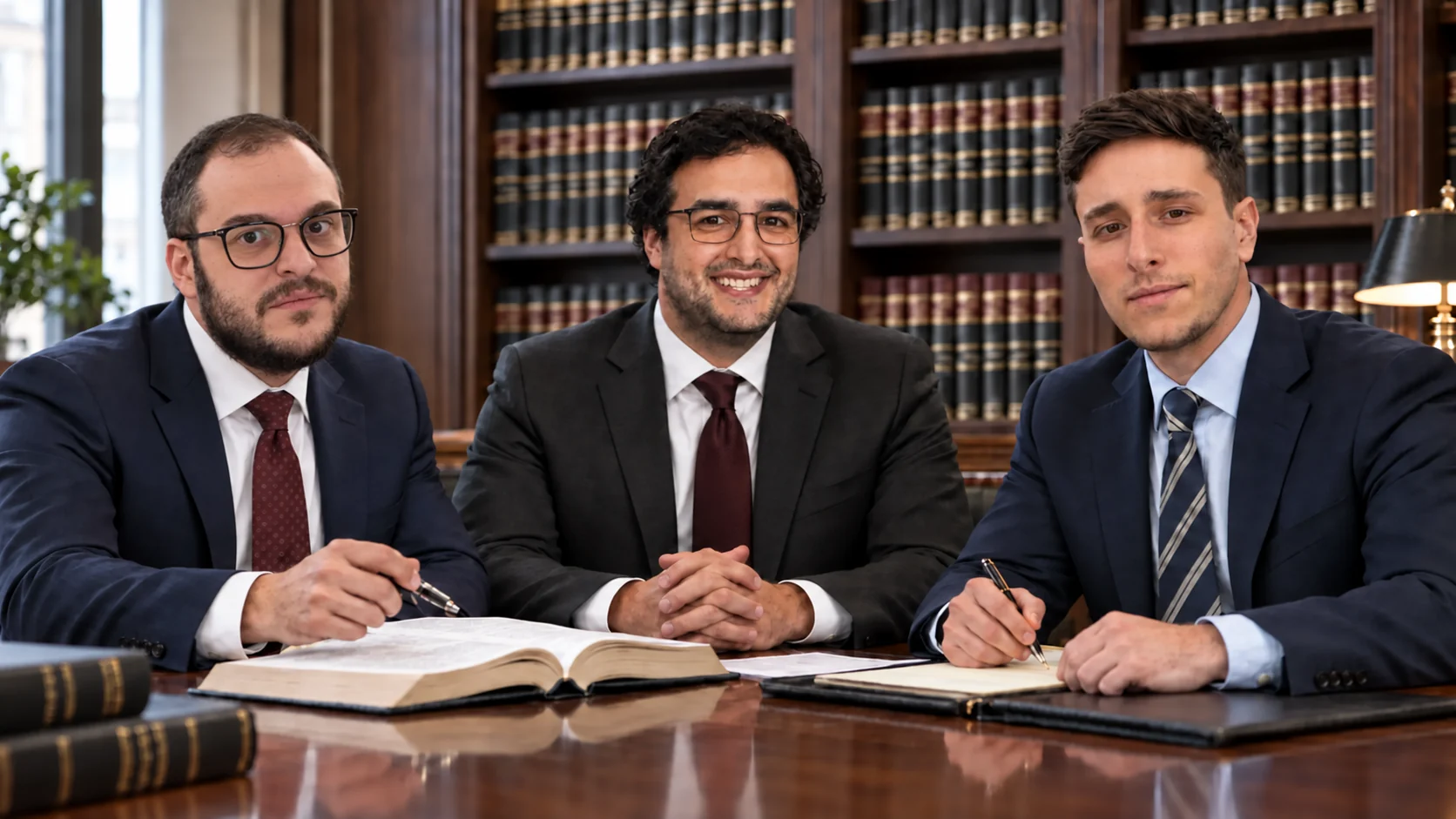
Mikhail Usher, Esq., Alexander Susi, Esq. and Mitchell Bromberg, Esq. in a law library

Attorneys · paralegals · support staff

Lawyers lead the strategy. A full team keeps the case moving.

Mikhail Usher, Esq., Alexander Susi, Esq. and Mitchell Bromberg, Esq. lead the firm’s legal work. They are supported by paralegals and a full support staff who help collect records, organize evidence, track deadlines, coordinate translations and interpretation, and keep client communication moving.

Attorneys supervise the work, make strategic decisions and provide legal advice.

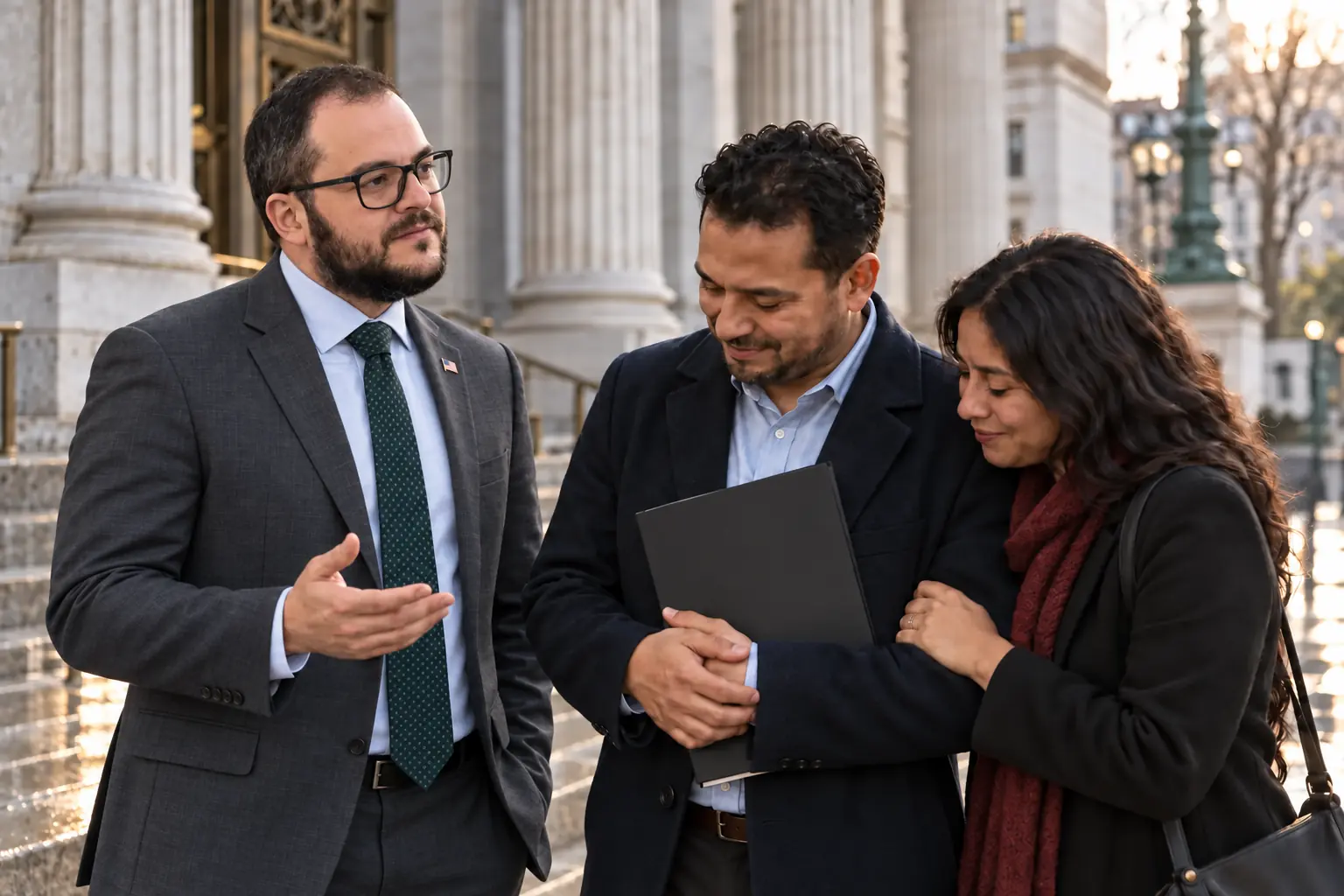
Mikhail Usher, Esq. outside a courthouse

Experience for cases without easy answers

Complex cases. Clients from around the world.

Across more than twenty years representing immigrants, Mikhail Usher, Esq.’s removal litigation has included asylum, withholding of removal, Convention Against Torture protection, cancellation of removal and other forms of relief. He has also handled detention, bond, reopening, BIA appeals and federal review. That breadth shapes how the firm prepares every filing, declaration and hearing record—with the next legal consequence in mind.

20+ yearsRepresenting immigrants
ThousandsOf removal matters litigated and appealed

Country evidence guides

Afghanistan · Cameroon · China · El Salvador · Haiti · Nicaragua · Nigeria · Russia · Ukraine · Uzbekistan · Venezuela

Eleven detailed guides open the library. The firm represents asylum seekers from countries throughout the world, before USCIS asylum offices and immigration courts nationwide. Browse asylum by country →

Straight answers

Questions people ask first.

Do I have to apply within one year?

Generally, yes: Form I-589 must be filed within one year of the applicant’s last arrival. Changed and extraordinary circumstances can create exceptions, but the exception and the timing of the later filing must be proved.

What is the difference between affirmative and defensive asylum?

Affirmative asylum begins with USCIS when the applicant is not in removal proceedings. Defensive asylum is presented to an immigration judge after removal proceedings have begun. A case can move from the first track to the second.

Can the firm help outside New York?

Immigration law is federal. The firm represents asylum matters before USCIS, the immigration courts and the Board of Immigration Appeals nationwide, and in federal courts where its attorneys are admitted.

A clear first conversation

Tell us where the case stands today.

We will identify the procedural track, the dates that may control and the questions that need an answer. The case evaluation is free. If the firm is not the right fit, we will say so.